
How Do You Choose Between Custom AI and Off-the-Shelf AI? The Ultimate Decision Guide
How Do You Choose Between Custom AI and Off-the-Shelf AI for Your Business?
Custom AI vs Off-the-Shelf Tools: How to Decide What’s Right
AI is no longer optional. It has become a real growth driver. However, one question keeps coming up: should a team build a custom AI solution, or buy a ready-made tool? So let’s know about how do you choose between Custom AI and Off-the-Shelf AI.
This choice matters more than it seems. The right answer depends on goals, budget, and timeline. This blog breaks down the difference. So the decision feels less confusing.
Understanding Off-the-Shelf AI Tools
Off-the-shelf AI tools are pre-built. They are made for general use. For example, think of chatbots, basic recommendation engines, and template-style dashboards. These tools launch fast. So setup takes little time.
These tools serve a broad audience by design. As a result, they rarely solve niche problems well. So teams often adjust their own workflow to fit the tool. That is the opposite of what should happen.
Understanding Custom AI Development
Custom AI Development takes a different path. It starts from scratch. The model, the data flow, and the features get shaped around one specific problem.
A custom machine learning model shows this clearly. For example, it can predict inventory needs. It can factor in seasonal shifts, regional demand, and supplier delays. Since it is built for one purpose, it fits real workflows better. It also scales alongside real growth, instead of forcing growth into a fixed template.
Also read:
Key Differences Between Custom AI and Off-the-Shelf Tools
Flexibility and Scalability
Customization is where off-the-shelf tools fall short. So once a business outgrows the tool, workarounds pile up. Custom AI, in contrast, grows with the business. Teams can expand it, retrain it, and reshape it as needs change.
Cost Considerations
Price is often the first factor teams compare. At first, off-the-shelf tools look cheaper. Pricing stays predictable, and there is no development cost upfront. But costs add up over time. Licensing fees, seat-based pricing, and extra software purchases stack quickly.
The math shifts with custom AI. It needs a bigger investment upfront. Over time, though, it often costs less overall. There are no recurring per-seat fees. There is also no need to buy extra tools to fill gaps.
Data Security and Ownership
Ownership of data matters a lot, especially at scale. Off-the-shelf platforms often process data on third-party servers. Terms can change without notice. Custom-built models solve this problem directly. They keep full control over where data lives and how it gets used. So industries like healthcare and finance often prefer custom-built systems.
Integration With Existing Systems
Legacy systems often expose the weak spot in off-the-shelf tools. Since these tools are built broadly, they often clash with older setups. Custom AI takes existing systems into account from day one. As a result, data moves more smoothly. Manual workarounds shrink.
Long-Term Return on Investment
Quick wins come easily with off-the-shelf tools. But custom systems tend to pay off more over time. Since they target one specific goal, they solve it with precision. So teams spend less time patching gaps. They spend more time using accurate results.
When Off-the-Shelf Tools Make Sense
A few situations call for a ready-made tool instead of a custom build:
- Speed matters more than precision
- The use case is common and well covered already
- Budget is tight and scale is not urgent yet
- The idea needs quick testing before a bigger investment
Early testing and simple tasks are where ready-made tools shine the most.
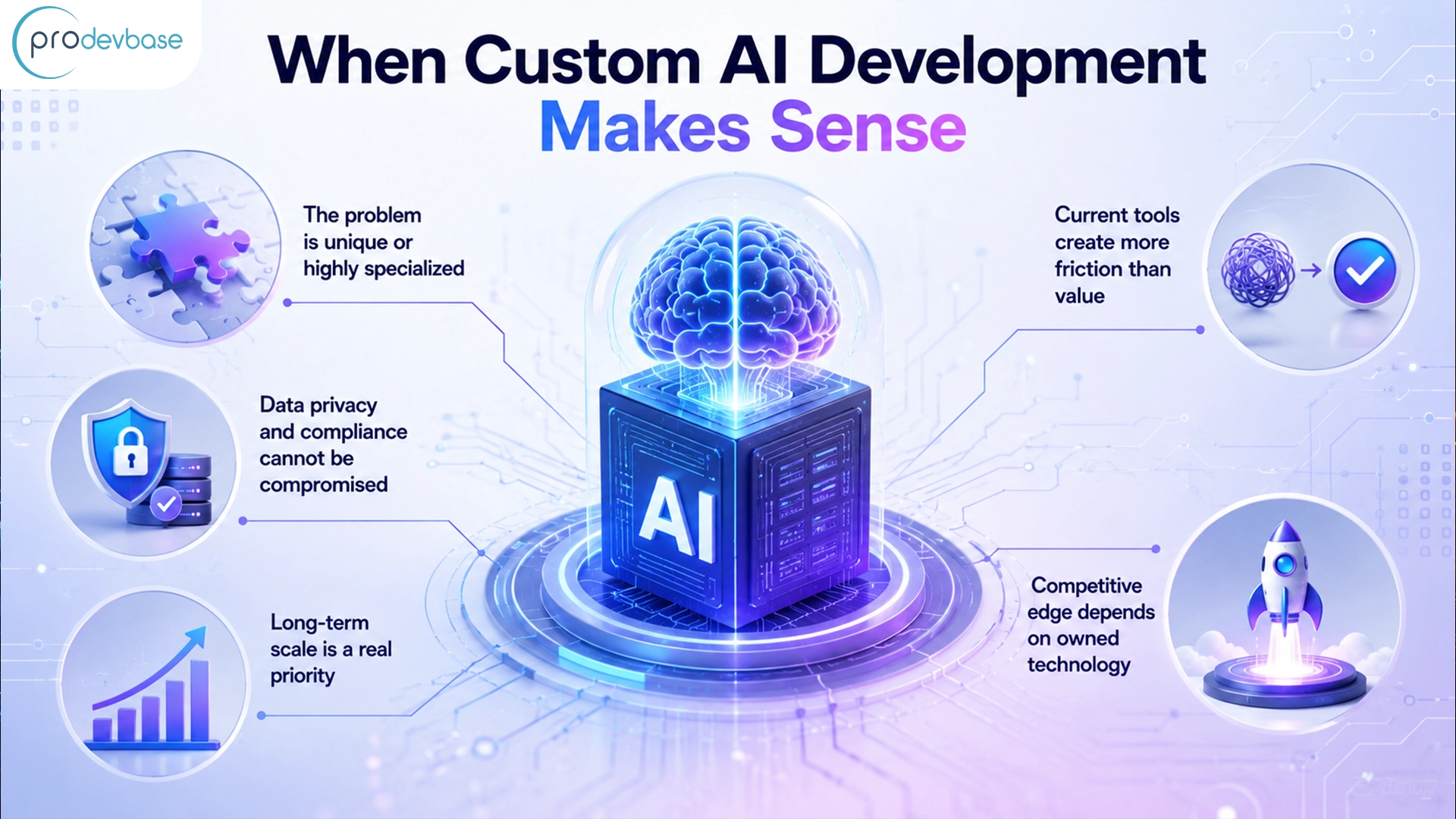
When Custom AI Development Makes Sense
A different set of situations calls for a custom-built approach:
- The problem is unique or highly specialized
- Data privacy and compliance cannot be compromised
- Long-term scale is a real priority
- Current tools create more friction than value
- Competitive edge depends on owned technology
A tailored machine learning model tends to outperform generic tools by a wide margin in these cases.
How Prodevbase Supports Custom AI and ML Development
Prodevbase steps in right at this decision point. As a technology partner focused on Custom AI and ML Development, the team helps businesses design, train, and deploy AI models. These models get built around real needs, not generic templates.
Support runs from data strategy through to deployment. So growth-focused businesses can adopt AI without hitting the limits of packaged software. Every industry has different demands, and that shapes the approach. The problem always comes first. The technology comes second.
Making the Right Decision
No single answer works for everyone. Instead, a few honest questions help:
- Is the problem common, or is it unique?
- How much does long-term scale matter?
- What level of data control is required?
- Is the goal quick testing, or long-term advantage?
Honest answers to these questions usually point to the right path. A hybrid approach can also work well. Start with an off-the-shelf tool to test quickly. Then move to Custom AI Development once the use case proves itself.
Final Thoughts
Custom AI and off-the-shelf tools both have a place in a smart technology plan. But as needs grow more specific, custom-built solutions tend to offer stronger long-term value. That said, an experienced partner makes the shift much smoother.
This exact space is where Prodevbase focuses its work. The team helps businesses move from generic tools to tailored, scalable AI systems built for growth. So whether the next step is a first AI pilot or a full custom build, early expert guidance makes the journey easier.
FAQs
Is custom AI always more expensive than off-the-shelf tools?
Not always. The upfront cost is usually higher. But custom AI often becomes cheaper over time. There are no recurring license fees and no extra tools needed to fill gaps.
Can off-the-shelf tools be upgraded to custom solutions later?
Yes, and this happens often. Many businesses start with ready-made tools. Later, they move to Custom AI Development once their needs become clearer.
How does Prodevbase help with this transition?
Reviewing current tools and finding the gaps is the first step. Next, custom machine learning models get built around long-term goals. This makes the shift from generic software to tailored AI simple.
What industries benefit most from custom AI?
Strict compliance rules make certain industries a natural fit. This includes healthcare, finance, logistics, and manufacturing. Unique workflows and large data needs also point toward custom-built AI.