
Does Agentic AI Improve Supply Chain Management? From Forecasting to Fulfillment
Agentic AI in Supply Chain: From Forecasting to Fulfillment
Supply chains have always run on prediction and coordination. However, traditional systems depend heavily on manual intervention, static rules, and delayed data. As a result, disruptions ripple across networks before teams can react. This is precisely where Agentic AI enters the picture, transforming supply chains from reactive systems into proactive, self-directing networks. So let’s know about does Agentic AI Improve Supply Chain Management.
What Makes Agentic AI Different
Unlike conventional automation, agentic AI does not simply follow pre-set instructions. Instead, it perceives, reasons, and acts independently toward defined goals. Consequently, agentic systems can monitor inventory levels, evaluate supplier performance, and adjust procurement strategies without constant human oversight. Because these agents operate continuously, decisions happen in real time rather than after quarterly reviews.
Furthermore, agentic AI does not work in isolation. Instead, it collaborates across departments, connecting demand planning, logistics, and warehouse operations into a single responsive ecosystem. Therefore, organizations gain a supply chain that adapts as conditions change, rather than one that reports on what already went wrong.
Forecasting: Moving Beyond Historical Averages
Traditionally, forecasting relied on historical sales data and seasonal averages. Nevertheless, this approach struggles during unexpected events such as raw material shortages or sudden demand spikes. Agentic AI, on the other hand, continuously ingests live signals, including weather patterns, social sentiment, and macroeconomic indicators, to refine predictions in real time.
As a result, forecasting shifts from a static, backward-looking exercise into a dynamic, forward-facing process. Additionally, because agentic systems learn from outcomes, accuracy improves over time without requiring manual model retraining. Consequently, businesses reduce both overstocking and stockouts, which directly protects margins and customer satisfaction.
Also read: How AI Agents Reduce Business Costs Without Sacrificing Growth?
Procurement and Supplier Management
Beyond forecasting, agentic AI also reshapes procurement. Specifically, agents can evaluate supplier reliability, negotiate reorder timing, and flag risks such as geopolitical instability or shipping delays. Meanwhile, because these systems act autonomously within defined boundaries, procurement teams spend less time on repetitive tasks and instead focus on strategic supplier relationships.
Moreover, agentic AI can simulate multiple sourcing scenarios simultaneously. Therefore, decision-makers receive ranked recommendations based on cost, risk, and delivery timelines, rather than a single static option. Ultimately, this leads to more resilient supplier networks that adjust automatically when conditions shift.
Warehouse and Inventory Optimization
Inside warehouses, agentic AI coordinates robotics, inventory placement, and order picking without waiting for manual triggers. For instance, an agent monitoring stock levels can automatically initiate replenishment while simultaneously adjusting storage layout to reduce retrieval time. Meanwhile, another agent can reroute inventory across regional hubs based on real-time demand signals.
Because these agents communicate with one another, inventory decisions no longer occur in silos. Instead, the entire fulfillment network functions as a coordinated system, reducing idle stock and minimizing fulfillment delays.
Fulfillment and Last-Mile Delivery
Fulfillment represents the final and often most visible stage of the supply chain. Here, agentic AI plays a critical role by dynamically selecting shipping routes, adjusting delivery schedules, and responding to disruptions such as traffic delays or carrier capacity issues. Additionally, agents can reassign orders to alternate fulfillment centers instantly, without escalation through several approval layers.
Consequently, businesses achieve faster delivery times while reducing operational costs. Furthermore, because agentic systems learn from delivery outcomes, routing decisions become increasingly efficient with each cycle.
Why This Matters Now
Global supply chains face constant pressure from shifting consumer expectations, geopolitical uncertainty, and rising operational costs. Therefore, organizations that rely solely on manual oversight risk falling behind competitors already leveraging autonomous decision-making. Agentic AI offers a pathway toward supply chains that are not only efficient but also resilient against unpredictable disruptions.
Prodevbase works with organizations seeking to modernize supply chain operations through agentic AI, helping bridge the gap between forecasting accuracy and fulfillment efficiency.
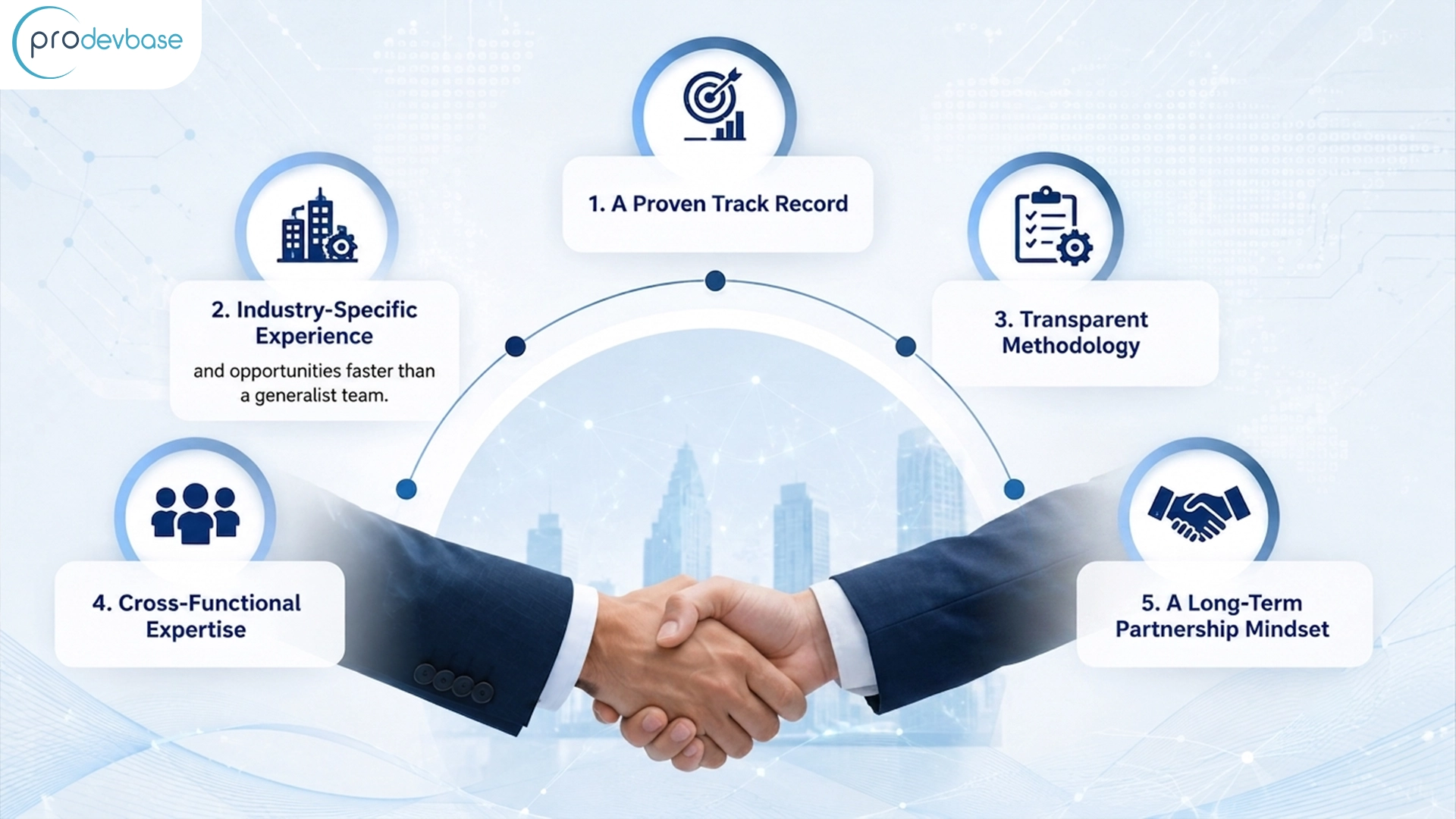
Building an Agentic AI Strategy
Adopting agentic AI does not require replacing existing systems overnight. Instead, organizations typically begin with a single function, such as demand forecasting, before expanding into procurement and fulfillment. Meanwhile, integration with existing enterprise resource planning platforms ensures continuity throughout the transition.
Additionally, governance remains essential. Because agents act autonomously, clear boundaries and monitoring frameworks help ensure decisions align with broader business objectives. Therefore, successful implementation balances autonomy with oversight, rather than removing human involvement entirely.
Prodevbase supports this transition by helping organizations design agentic AI frameworks tailored to specific supply chain challenges, from initial pilot programs through full-scale deployment.
Looking Ahead
As agentic AI matures, supply chains will likely evolve into fully interconnected ecosystems where forecasting, procurement, warehousing, and fulfillment operate as a single autonomous unit. Consequently, disruptions that once caused weeks of delay could be resolved within hours. Moreover, as agents continue learning from real-world outcomes, decision-making will only become sharper and more reliable over time.
Organizations exploring this shift benefit from partnering with teams experienced in both AI implementation and supply chain strategy. Prodevbase offers this combined expertise, helping businesses transition from traditional supply chain models toward agentic, self-optimizing systems.
Final Thoughts
Agentic AI represents a fundamental shift in how supply chains operate, moving from reactive problem-solving toward proactive, autonomous decision-making. From forecasting through fulfillment, this technology enables faster responses, reduced waste, and stronger resilience against disruption. As adoption grows, organizations that embrace agentic AI early stand to gain a lasting competitive advantage.
For businesses ready to begin this transition, Prodevbase provides the strategic and technical support needed to implement agentic AI effectively across supply chain operations.